
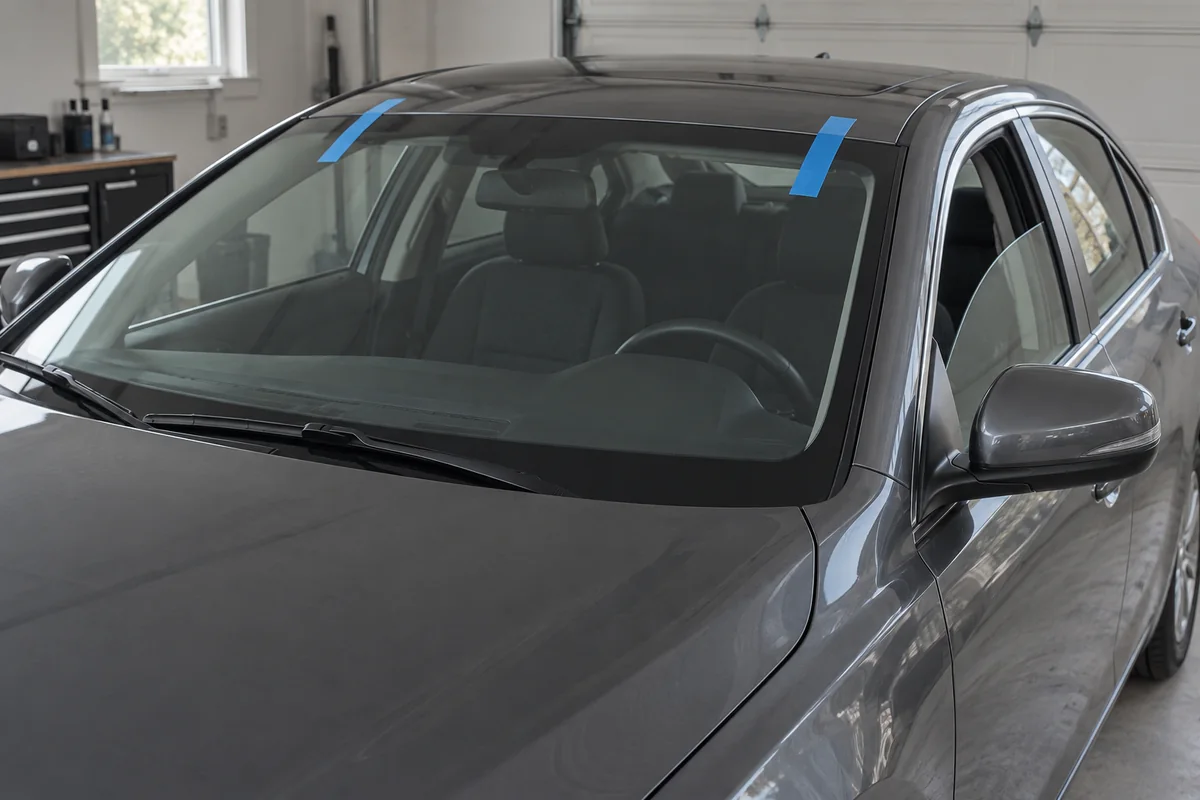
Drive-away time
Minimum drive-away time is the time the adhesive needs to reach enough strength for the car to be driven safely. The AGSC, the auto glass safety council, says it varies by the type and brand of adhesive and the weather at the time. Published figures range from 30 minutes for some fast-cure urethanes to two hours for others. The ANSI/AGSC/AGRSS 005-2022 standard requires the installer to tell you the minimum drive-away time before and after the installation.
The rest of the first day
- Leave the retention tape on; it holds the moldings while the adhesive firms up.
- Avoid slamming doors.
- Keep off rough roads and potholes where you can.
- Do not stick anything back on the glass until the installer says.
Car washes
Ask the installer when the car can go through a wash. High-pressure jets and brushes at the edge of fresh adhesive and moldings are the concern, and the answer depends on the product used.
Winter cure
Cold is where products differ most. The AGRSS standard requires adhesive instructions to include drive-away charts with temperature and humidity variables where they apply, plus any procedures for bad weather. One DuPont BETASEAL urethane is applied only at 40°F or warmer, while Sika rates its SikaTack ULTIMATE for application down to 0°F. Ask which product was used, and park in a garage overnight if you can.
After-install timeline
| When | What to do | Why |
|---|---|---|
| Right after the install | Wait out the drive-away time you were given | The adhesive needs minimum strength |
| Rest of the first day | Leave tape on, avoid slamming doors | Holds moldings while the bond firms |
| First 48 hours | Avoid rough roads; keep stickers and mounts off the glass | Lets the adhesive cure undisturbed |
| First car wash | Ask the installer first | Jets and brushes at fresh edges |
| First week | Watch for leaks, wind noise, loose trim | Early faults are easier to fix |
| Wind noise, leaks or a warning light | Call the installer back | May need resealing or calibration |
Swipe the table sideways to see every column.
If a camera warning appears
A lane-keeping or collision-warning message after a replacement usually means the camera needs calibrating or finishing its calibration. The installation standard says a glass company that does not calibrate must tell you that the maker requires it. A missing warning does not prove the camera is aimed, so keep the calibration record. See the ADAS calibration page.
Leaks and wind noise
A whistle at speed or a damp headliner or dashboard means a gap in the bead or a molding. Note when it happens and call the installer. Do not add sealant yourself; it hides the gap and complicates a proper fix.
Wipers, mirror and sensor
If the automatic wipers misbehave, the headlights switch on at odd times, or the mirror sags, the rain and light sensor or the mirror mount may not be seated properly against the new glass. Tell the installer; these parts were moved from the old windshield and are part of the same job.
Keep the paperwork
AGRSS requires installers to keep records of each replacement and any calibration for at least three years. Keep your own copy: the invoice, the glass maker, the drive-away time and the calibration result. For the job itself, see windshield replacement.
Village stickers and I-PASS after new glass
I-PASS sticker tags
The Illinois Tollway's I-PASS sticker tags are permanently installed on the windshield. The Tollway says they last until removed and are not designed to be moved between vehicles, so a tag on the old glass goes with it. Order a replacement sticker tag from the Tollway, which says tags ordered online or at its customer service centers carry no charge, and fit it to the new glass in the black-dotted section, or behind the mirror if there is none. Older hard-case transponders sit on mounting strips and can be refitted. A Tollway transponder notice also warns that windshields with metal in the glass, and some heated or solar-tinted glass, may keep the signal from being read, and it offers a license plate transponder for affected vehicles.
Village and city stickers
Rules differ by town. The Village of Alsip announced that residents no longer need vehicle stickers as of July 1, 2024, and Evergreen Park repealed its display requirement in February 2024. Chicago still requires a city sticker, and its City Clerk says that if a windshield was damaged or replaced, you surrender the old sticker or show the replacement bill and pay a fee for a new one. If your town issues a windshield sticker, call the clerk before the glass is replaced and keep the invoice.