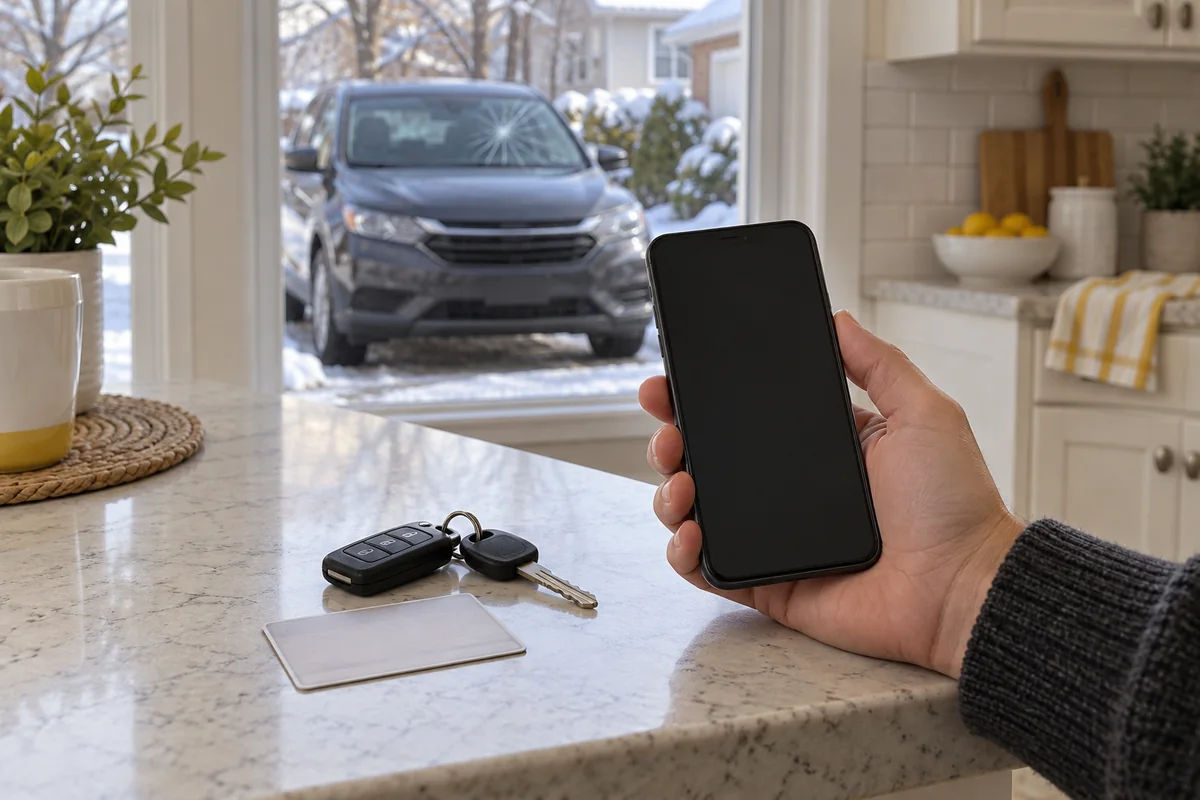
- Describe the vehicle. Year, make, model and trim, plus the VIN if you have it. The VIN is printed on a plate at the lower driver-side corner of the windshield and on the driver's door jamb.
- Describe the glass. Which glass broke (windshield, door, quarter, back glass), whether it is a chip, a crack or shattered, and roughly how big the damage is and where it sits.
- Get connected. One of our local auto glass partners takes it from there and plans the work around where the car is parked. Give the exact address and ZIP so the work is planned for where the car actually sits.
- Settle the job with your technician. Your technician goes over the part, whether a repair will do, any camera calibration, where the work happens, when, and what it costs.
What your technician needs to quote
A windshield for one model year can come in several versions: with or without a camera bracket, rain sensor, heated wiper area, acoustic layer or head-up display area. Two cars that look alike can need different glass, which is why the VIN matters more than the model name. If there is a dark housing behind the rear-view mirror, say so; it usually means a camera that may need calibrating after a replacement.
If insurance may pay
Call your insurer before you book, and ask three things: whether glass falls under your comprehensive coverage, what the deductible is, and whether the insurer needs photos, an inspection or a claim number first. Your insurer decides the coverage; your technician quotes the work. The glass insurance claims page has the Illinois details.
Where the work happens
Tell your technician where the car is parked. A driveway or private lot may work for mobile glass work if there is room to open both front doors, the surface is firm, and the weather suits the adhesive. Village parking rules also matter: a car cannot sit at the curb on a street-sweeping day or during a snow ban. Some camera calibrations need targets in a controlled indoor space, which a driveway cannot provide.
Safety before scheduling
If visibility is badly blocked or the windshield is loose, say so first, and ask whether the car should be moved at all. You'll settle the time slot on the call, and your insurer, not the call, approves any claim.
Have this ready
| Detail | Why your technician asks |
|---|---|
| Year, make and model | Narrows the glass to one vehicle family |
| VIN (lower corner of the windshield or the door jamb) | Separates versions with a camera, sensor or heated area |
| Where the damage is and how big | Decides between resin repair and new glass |
| Camera or sensors behind the mirror | Flags a possible calibration step and part choice |
| Insurance carrier (if claiming) | Claim number and deductible decide who pays what |
| Where the car will be parked | Decides mobile work versus a shop bay |
Swipe the table sideways to see every column.